
AI-driven layoffs, up close and personal
Also: Roomba goes under
Welcome to Cautious Optimism, a newsletter on tech, business and power.
Monday. The world is tiptoeing towards the final, slower weeks of the year, but we’re not done yet. We’ll hear quarterly results from Navan (went public in October) later today; from Micron and Jabil on Wednesday; and from Accenture and FedEx on Thursday.
More importantly, the US economy will receive a heat check on Tuesday, when we learn November employment data and some fill-in numbers from the October labor market. I would have said “place your bets” as a joke, but I suspect a few of you are prediction market fans, so I don’t think I need to. To work! — Alex
📈 Trending Up: Chamberlain, not Reagan … startup consolidation in India … private equity … sanctions on Russia … tech debt worries … technologists over populists
📉 Trending Down: Free speech in Hong Kong … healthcare in Florida … China’s economy … using credit cards to pay your mortgage … data on the Chinese economy
Things That Matter
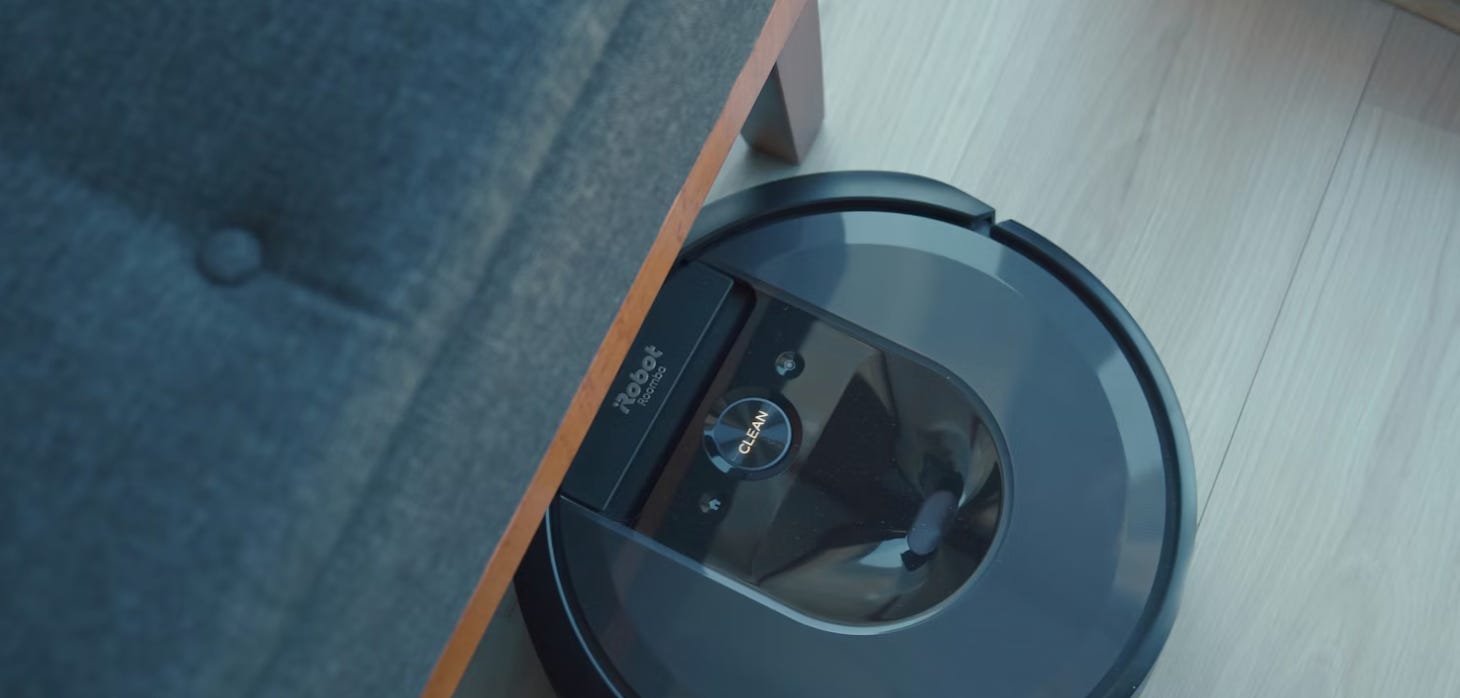
Roomba goes under: In a move that surprised few, iRobot has filed for bankruptcy with intentions of handing itself to a lender and its manufacturing partner (Shenzhen PICEA Robotics). Thankfully for owners of Roomba vacuums, the company doesn’t expect service disruptions. The sale will be orderly if it goes according to plan.
Why do we care about a tiny public company’s end as a stand-alone asset? Because Amazon wanted to buy Roomba back in 2022, but called off the deal after the European Union cried foul (the FTC was also critical of the deal). The EU was worried that Amazon’s market scale, paired with iRobot’s Roomba line, might give the retail giant “the ability and the incentive to foreclose iRobot’s rivals by engaging in several foreclosing strategies aimed at preventing rivals from selling RVCs on Amazon’s online marketplace and/or at degrading their access to it.”
Given Amazon’s market power, the argument likely rang true. But the deal’s termination and the later demise of Roomba as a public company offer much argumentative fodder for those who think corporate combinations should be waved through without complaint.
AI-driven layoffs, up close and personal: I am not much of an AI doomer, but I do worry about the near-term impacts of job dislocation as the technology develops. While productivity gains are net-positive for the global economy, it does get depressing when you see people’s jobs disappearing and small companies dying on the vine.
Blood in the Machine has a fresh compendium of notes from workers and business owners in the copywriting realm who have been impacted by AI tools. Here’s what happened to a small company in the B2B copywriting space:
[M]y agency employed 8 people total at our peak. But then 2022 came around and clients lost total faith in human writing. At first we were hopeful, but over time we lost everything. I had to let go of everyone, including my little sister, when we finally ran out of money.
While we celebrate AI’s improving capabilities, maybe we should start working on the societal cleanup that the overhaul of so many professions and industries will require.
CEOs plan more AI spend in 2026: More than 68% of CEOs “plan to increase AI spending in 2026,” according to a new survey of global business leaders by Teneo. The report also says: “AI is the only technology in which CEOs plan to increase investment at a faster rate than in 2025.”
That’s not just because the tech is good enough to fully replace humans in most contexts, but because it’s also cheaper. Job losses due to AI will not come in the form of 100% output match at 80% the cost — they will come in the form of 80% output match at 20% the cost.
Anatomy of a shooting
Over the weekend, my little family attended our street’s yearly holiday confab: Think kids frolicking inside someone’s home, ladled punch, cheese on sticks, cookies that you can’t quite name; name-tags and promises to spend more time together in the new year.
My family had to boogie early, as the children’s naps didn’t quite work out and the tots were kaput by mid-afternoon. So we packed up and walked home, surprised to see several missed calls when we gave our phones a look.
The news spread fast: Not too far from where we live, a mass-shooting had just unfolded. Our stomping grounds had been turned upside down.
Suddenly, weekend errands were out of the question. “Should we turn off the lights and abscond upstairs?” Dinner was a subdued affair as we tried to stay focused on the kids, not our phones. Your humble servant kept tabs on Twitter. Around us, the city shut down as most folk listened to pleas from the city to stay indoors with doors locked. Hundreds of people with guns combed the streets hunting for the killer.
Being an American, I am no stranger to reading news about gun violence. But it was staggering to hear helicopters over my house, to endure sirens in sequence like a tape being played backwards and forwards, to see pieces of our daily life in the background of every news shot and viral clip.
You begin to calculate, “When was I last right there? What if we had taken the girls for a walk? How close were we to getting hit, too?”
Several hastily assembled press conferences later, we learned that two people were dead and another nine were hospitalized after someone walked into a Brown University building and opened fire. I won’t repeat the details here.
Brown was where my wife attended her residency, where my father got his PhD back before I was born. The building where the shooting occurred is on a regular stroller route I’ve kept for years; the shops in the endlessly looping social media images and videos are places I frequent. Our home had been attacked.
The shooting at Brown University was not the only act of senseless violence this weekend. Over in Australia, a Jewish religious gathering was attacked by two people who killed at least 15 and hospitalized dozens. What senseless pain; what utterly unnecessary misery.
The closer the stone lands to you, the greater the ripples. It shouldn’t have taken a rock splashing so close to my children for me to acknowledge how inured I had become to gun violence. It always seemed to happen just off-camera; awful, worth protesting, but ultimately something that I could do little about.
But when the news crews start setting up on street corners where you watched your kids learn to traverse sidewalks, it hurts more — even if it shouldn’t.
We should feel every instance of mass violence as if it had happened on our very doorstep. After all, if we can’t heal ourselves in time, the rock will splash closer than you want it to.
As a small aside, reading thousands of live tweets discussing what was happening in my little patch of Earth made it plain that many people view shootings as merely tools to push their own views. I saw anti-Semitic conspiracies; people jumping to conclusions that the shooter in question had to be an immigrant. That sort of thing. Don’t truck with it.