
Damn, everyone is mad at Satya
Welcome to Cautious Optimism, a newsletter on tech, business, and power. Modestly upbeat.
📈 Trending Up: Apple’s acquisitiveness … Chinese chip IPOs (really!) … better late than never … checking accounts at Checkbox … layoffs … chances of yet another shutdown … Kevin Warsh at the Fed … AI money in motion … Granola’s valuation … Sandisk’s stock …
Headline of the Day: Medium gives employees Friday off to participate in national strike protesting ICE
📉 Trending Down: American chip dominance … Anthropic-Pentagon relations … press freedom … video game stocks? …
Things That Matter
Ethos’s IPO: Ethos Technologies (our first look here) raised $200 million by selling 10.5 million shares at $19 apiece, the middle of its $18 to $20 per-share IPO range. During its first day of trading, Ethos fell to $16.85 per share. The company is worth around $1.1 billion, under its final private price of $2.7 billion.
Ethos’s exit brings around $400 million worth of venture capital to the public markets, and we’ll never sniff at a unicorn IPO.
Behold, Perplexity: Yesterday, we asked what’s up with Perplexity, a company once inescapable in the headlines that has felt oddly quiet in recent months. Enter news. Today, the company signed a $750 million deal with Microsoft to consume Azure compute over a three-year time horizon. Comically, Perplexity is also a major Amazon cloud computing customer, which must be fraught given the ecommerce giant’s cease-and-desist letter sent last year concerning the startup’s agentic commerce product.
Back in September, Perplexity was reportedly closing in on $200 million worth of annual recurring revenue.
But why? I’ve long been confused by the ability of xAI to raise tens of billions of dollars despite modest revenues. The Elon Musk AI lab generated $107 million worth of top line in Q3 2025, a doubling of its second-quarter number. Impressive growth, but compared to rivals Anthropic and OpenAI, the numbers are small. No matter, xAI was valued at $230 billion in its Series E, an early 2026 round that added $20 billion to its coffers. (Anthropic is worth around $350 billion with a run rate of around $9 billion at the end of 2025, for reference, while OpenAI is worth $500 billion on a $20 billion run rate.)
The why is becoming a bit clearer. News broke yesterday that Musk may combine xAI with his space company, SpaceX, before the launch company goes public later this year at a valuation that could surpass $1 trillion.
It’s hard to get your hands on SpaceX shares. Everyone wants them, and its IPO is going to be a massive event. If you are Musk and want to ensure that you can continue investing in your AI business, why not use the space launch fundraising event to keep the GPU shipments humming?
Remember the investors that backed Musk’s dramatically overpriced purchase of X? They eventually saw their social media shares converted into AI shares when X and xAI merged. Now they might get SpaceX shares for their initial X shares, if the combination goes through as discussed. Winning.
SpaceX is a big enough potential IPO that investors may be willing to see a deeply unprofitable AI lab stapled to its wings. Perhaps less popular would be fusing xAI and Tesla, which Reuters reports is also under consideration.
Why do we care about xAI’s revenues in all of this? Because it’s spending tens of billions against a run rate that is a fraction of its rivals’ own. Those same competitors are also spending tens of billions, but against far greater revenue bases. It’s cheaper to buy stuff when you make more money.
Musk likes to riff. SpaceX could go out sans xAI. Tesla may remain unencumbered, too. But given Musk’s animus towards OpenAI and his desire to beat it in the market, I wouldn’t be shocked if the entrepreneur found a way to ensure that his AI project has ample capital to continue competing.
It’s an AI IPO race! Speaking of major IPOs this year, OpenAI’s own listing could come as soon as Q4 as it works to beat Anthropic to market. I’ll believe it when I see an S-1.
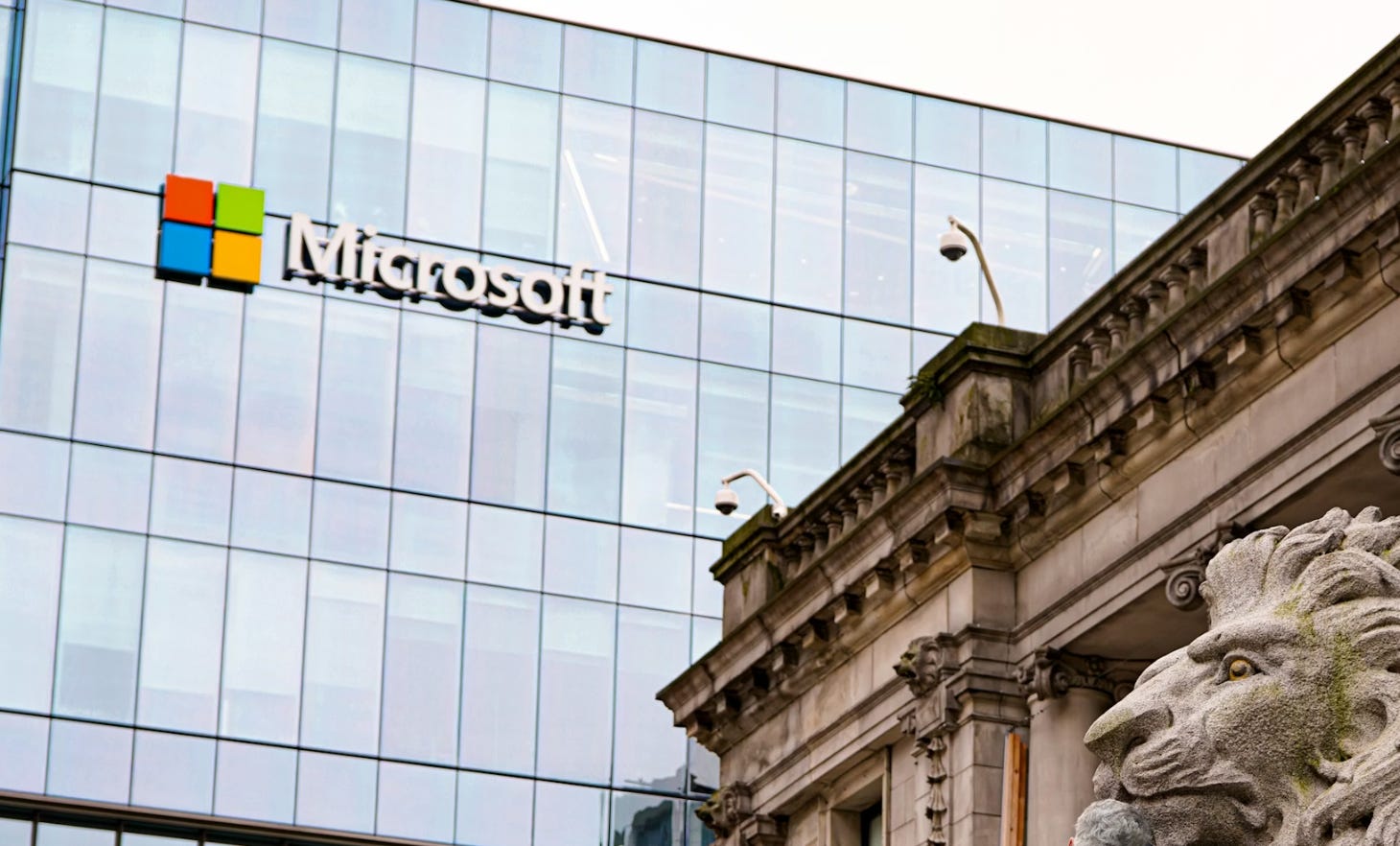
Damn, everyone is mad at Satya
Microsoft shares fell sharply yesterday amidst a general selloff in software stocks that pushed the Bessemer Cloud Index to its lowest level since April, 2025. Figma got rekt. ServiceNow was slashed by investors. The list went on and on.
Why the panic? Why is the market somehow over software, even if it’s the only thing we seem able to talk about? Let’s start with Microsoft:
Investors are worried about its data center capex, which came in above expectations. Microsoft reported $37.5 billion worth of capex in its most recent quarter, ahead of an anticipated $34.31 billion result.
Investors are worried about its cloud growth, which came in a hair under expectations. Microsoft reported Azure growth of 39% in the quarter, under an anticipated 39.4% expansion rate.
Investors are worried that its AI-powered products aren’t growing quickly enough. Perhaps the disclosed 15 million M365 Copilot seats datapoint was smaller than the market expected?
Investors are worried that OpenAI makes up so large a portion of its backlog. An analyst asked about the 45% of Microsoft’s RPOs that OpenAI represents; Microsoft’s CFO countered that the other 55% is diversified and growing quickly, too.
From where I sit, the company’s quarter was strong, and its AI bets are paying off as expected. The mistake I made was underestimating how worried investors are about the company’s capex outlays and how little patience they have for those investments to pay themselves back.
A bit more capex? A little bit less cloud growth? All that for a multi-hundred-billion-dollar valuation erasure? It only makes sense if the market is on tenterhooks regarding AI capex.
But the selloff in software stocks more broadly was not merely driven by Microsoft’s near-term data center outlays. There’s also rising concern that the entire software-as-a-service industry could be under threat. From two angles:
AI coding tools continue to improve, affording companies the option of building more of the software instead of buying it. If true, the situation could boost SaaS churn while limiting its pricing power; as a result, SaaS companies could see themselves growing more slowly at higher effective CAC. Not good for a sector that has long struggled with GAAP profitability.
Discrete apps might be going the way of the Dodo if companies are able to ask AI agents to simply execute work. Most software is CRUD (create, read, update, delete), information is already pooled in data lakes, and AI agents are increasingly supple, so why do we need to pay for Figma and Word and Salesforce? Can’t we just ask agents questions and demand answers and action?
Another angle is the idea that if adding features to software becomes easier thanks to AI-powered coding, then won’t all software services become so broad that they wind up competing with many more companies?
Each hypothesis could be false, but when combined aren’t helping market sentiment for software companies.
Yes, it does feel weird to be living in a time when software has never been more important, and many of the world’s great software companies are out of favor.
Let’s see how software stocks trade next week; perhaps we’re due for a rebound. I know the venture crew is certainly hoping for one, given its IPO backlog of, you guessed it, software startups.